The Image Model Race Is Over. Nobody Told You.
ChatGPT Images 2.5 shipped sharper pixels and a sketch tool. The interesting part is what the release quietly admits.
Every week, people generate more than 3 billion images in ChatGPT. Read that number again. Three billion, every week. That is roughly one image for every two humans on Earth, and it does not even count API calls.
OpenAI dropped that figure at the top of the ChatGPT Images 2.5 announcement, and it is the most important sentence in the post. Not the sharper details. Not the 50% latency cut. Not the two new API models with names that sound like energy drinks. That 3 billion number, because it tells you what this release actually is.
It is a company announcing that the image model race is over. The proof is in what they shipped.
The boring, impressive middle
The model itself is better. Reference photos stay anchored. Lighting reads natural. Edits change only what you asked them to change, and multi-turn edits stop drifting after the third or fourth round. LM Arena has gpt-image-2.5-sunburst at 1421, forty points clear of gpt-image-2 at 1381. Real gains. None of them are the story.
Nobody on Hacker News argued about image quality today. They argued about carbon receipts, about AI slop on kebab shop signs, about whether your mom remixing your childhood photos is sweet or sad. That is the tell. When a frontier model ships and the loudest reaction is a debate about the social consequences of volume, the quality argument is settled. It has been settled for a while.
The real product is the loop
Now look at the features OpenAI chose to headline. Sketch, where you draw a rough layout and the model finishes it. Templates for posters and merch. Comments placed directly on top of an image to point at exactly what to fix. Shareable prompts so other people can remix your idea.
None of these are generation features. They are iteration features. OpenAI has figured out that the five seconds of generation was never the expensive part of creative work. The expensive part is the ten minutes of back and forth, the “no, the other blue, and move the logo up” conversation. Sketch, inline comments, multi-turn consistency: every one of them is an attack on that loop.
We watched the same play in text. Once GPT-4-class models got good enough, nobody won on benchmark scores. The winners owned the loop around the model: context, memory, tooling, evals. Image generation just hit that inflection point. The model is a commodity, and the moat moves upstream to whoever controls the edit loop.
The showcase photo has three fingers
Best detail in the thread: OpenAI’s own demo images still carry the classic tells. The composite party photo, the one built to show off multi-turn consistency, has a guy holding a cup with three fingers. The teeth on the man in the middle are wrong. One commenter spotted what they called the Thing from the Addams Family on someone’s shoulder. Another noticed the pillow count changed between edits.
I am not dunking on the model. Two years ago these artifacts were everywhere; now they are rare enough that a bored commenter has to zoom in and squint. But there is something honest about shipping a showcase image that gets shredded in twenty minutes. You do not pick a three-fingered hand as your hero shot when you are still fighting the quality war. You pick it when you have already won and moved on to the fight that matters, which is control.
The part we should actually worry about
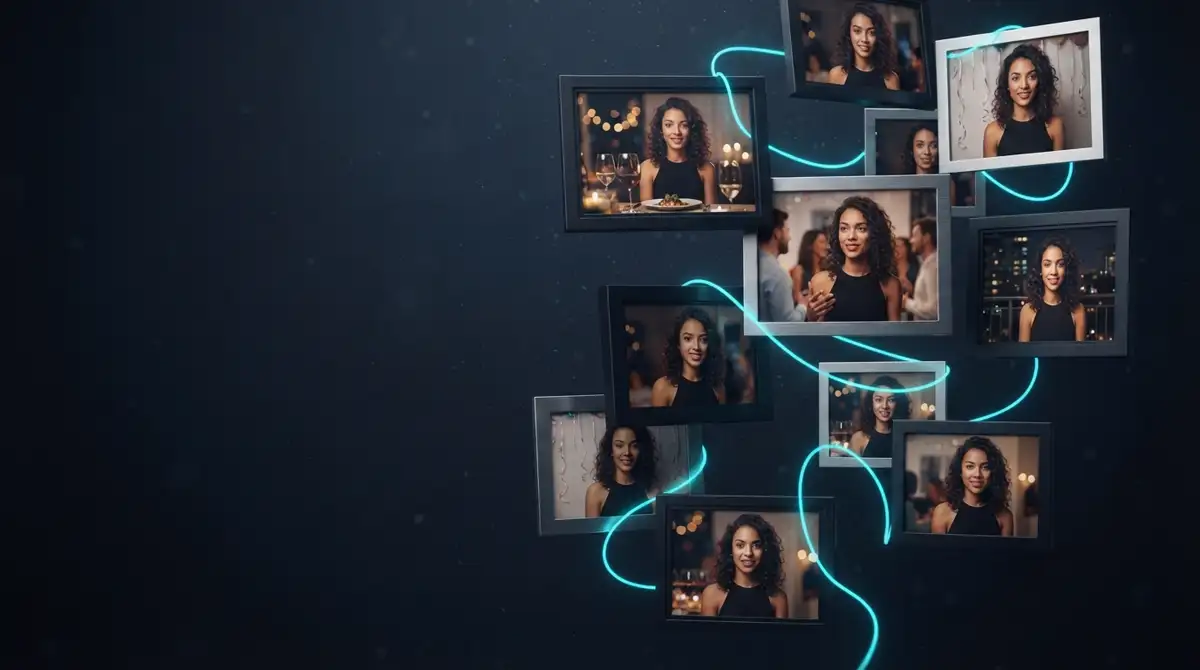
Here is what nobody in the thread said out loud. Multi-turn consistency plus reference fidelity plus shareable prompts is exactly the recipe for a believable fake photo album.
The “remix my childhood photos” feature your mom wants is the same machinery that can put you at a party you never attended, with friends you never had, in a year you did not live. One commenter said it better than I can: at some point you will have more memories of fake events than real ones, and more emotional weight attached to them. Not a deepfake panic. Something quieter. The slow replacement of the archive of your life with a better-looking version of it.
C2PA metadata and invisible watermarks are compliance features, not trust features. Nobody checks provenance before they feel something looking at a photo. The watermark protects you in a courtroom. It does nothing for the moment your mother feels a swell of nostalgia for a memory that never happened.
What to watch next
The next twelve months of image AI will not be decided by a model card. They will be decided by who owns the edit loop: the iteration, the consistency, the reference anchor. Adobe already signed up to run GPT-Image-2.5 inside Firefly, which is the surest sign that OpenAI sees its future as a component in someone else’s workflow.
I am watching the memory angle. The technology that keeps a face identical across fifty edits is the technology that can fabricate a childhood. That is the capability worth thinking about. Not whether the new model renders hands correctly. The hands are fine. That was never the problem.
Source: Introducing ChatGPT Images 2.5